
Estate Planning
An estate plan is another term to describe the process of arranging the transfer and allocation of a person's assets in anticipation of their incapacitation or death. The focus for many individuals in creating an estate plan is generally in order to provide for their children or other family members. In addition to planning for your family, you can also plan for giving to a church or ministry of your choice.
Below are our planned giving options:
Charitable Remainder Trusts
You might be interested in initially providing for yourself, your spouse, and your children, but thereafter provide for a charity. Under a Charitable Remainder Trust, assets are given to an intermediary (HBF) which distributes a portion of the invested income to the donor or designee until their death. The distribution amount is a percentage of the funds contributed to the trust. Upon their demise, the gift is passed on to the charitable cause specified by the donor.
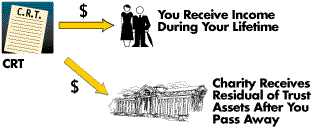 The donor benefits by being able to make a gift to charity, avoid capital gains taxes, get more current income, and save taxes on ordinary income. Non-charitable beneficiaries, say children, receive a regular distribution for a designated period, which can consist of both income and principal. The charity benefits by receiving whatever is remaining in the trust after all payments to the beneficiaries and the use of the gift after the income payments to the donor or their designee are over.
Charitable Gift Annuity
Charitable Gift Annuities operate similar to Charitable Remainder Trusts, but are documented with less extensive standard provisions and are usually used for gifts between $5,000 and $100,000.Under a Charitable Remainder Annuity Trust (and a CGA), the distribution amount is a percentage of the principal contributed to the trust.
Reversible Living Trust
This type of trust is referred to as a “living” trust because it takes effect during a person’s lifetime. The most common situation is where the person who establishes the trust serves as “Trustee” and “Beneficiary” during their lifetime. That person will be able to actively make changes and manage the trust as trustee and receive the benefits of the trust while they are alive. In the event that the person becomes incapacitated during their lifetime, the trust instrument states who would serve as successor trustee.
The living trust can act as a “will substitute” in that it can set forth the beneficiaries. The successor trustee of the living trust could manage and distribute the remaining assets in the trust to the designated beneficiaries WITHOUT having to go to court to probate the will. For this reason, living trusts have become popular in Hawaii because people often prefer to avoid the expenses, delays, and publicity that are associated with the probate process. The trust is a very flexible vehicle and can provide for multiple beneficiaries at different time periods.